
Nerve stretch test
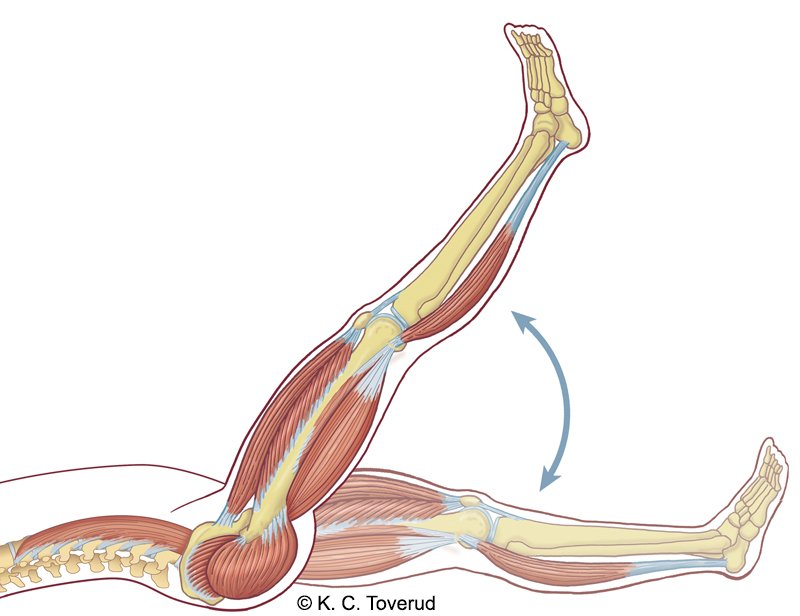
Lasegue's test (nerve stretch test of the sciatic nerve L4-S2) is performed with the patient in a supine position, indicate degrees for a positive test (0-60°) where there is radiating pain distal to the knee joint. Bragard test is performed by dorsiflexing the ankle and flexing the neck when the leg is lowered to just below the level (degree number) of the Lasegue sign. Pain radiation during the Bragard test often indicates a nerve root involvement.
Lasegue's test, pain beyond the knee joint at < 60° passive elevation
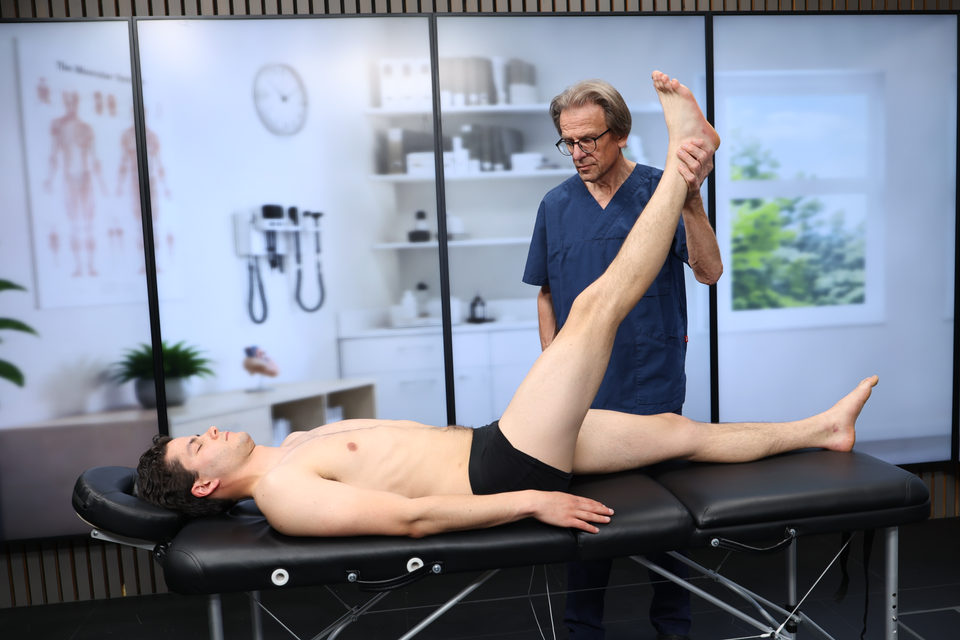
Bragard test, lowers the leg until the pain disappears, then dorsiflexes the ankle and registers whether there is pain radiation
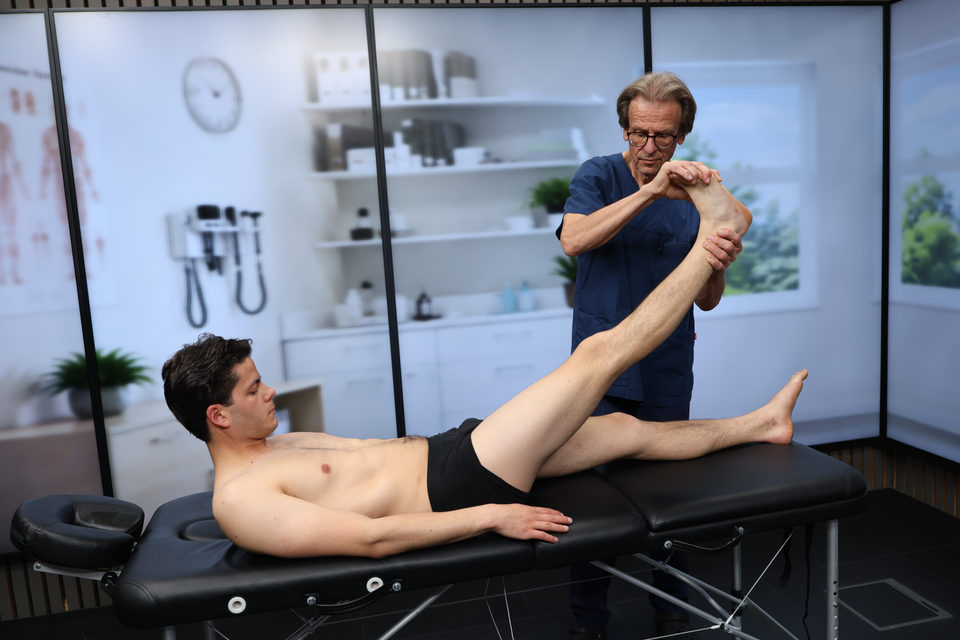
Test characteristics: Sens 97, Spec 57, LR+2.23, LR-0.05
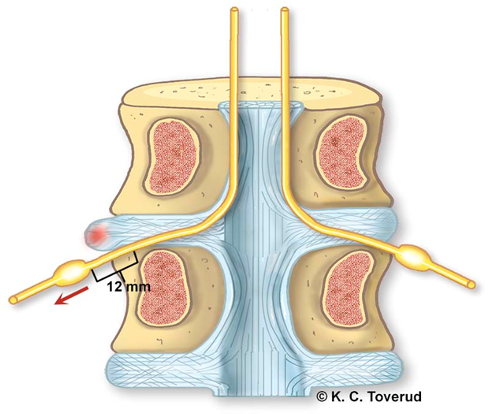
Nerve stretch test
During nerve stretch test, the spinal nerve moves 12 mm
Gives mechanical compression between the nerve and a prolapse
Bellier A, Latreche A, Tissot L, Robert Y, Chaffanjon P, Palombi O. Movements of the lumbo-sacral nerve roots in the spinal canal induced by straight leg raising test: an anatomical study. Surg Radiol Anat. 2018 Nov;40(11):1223-1230. doi: 10.1007/s00276-018-2084-3. Epub 2018 Aug 20. PMID: 30128897.
Other special tests for the back
- Thoracic intervertebral disc flexion
- Schober test
- Slump test
- N. femoralis stretch test (Reverse Lasegue)
- Skin reflex
- Key examinations in radiculopathy L2-S2
- Nerve root involvement L2
- Nerve root involvement L3
- Nerve root involvement L4
- Nerve root involvement L5
- Nerve root involvement S1
- nerve root involvement S2
- Cauda equina syndrome